
What was the reason for the Niyoga practice behind the birth of Vidura?

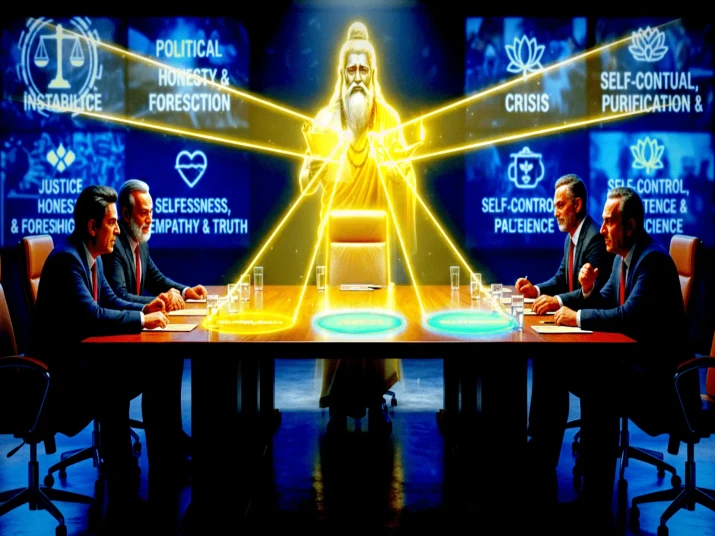
Table of Contents
- Who were Vidura's parents, and what was the reason for Vidura's birth due to the then-custom of appointment?
- How did he become one of the ministers of the Kuru dynasty despite being born as a 'Sudra' in the social structure and caste system?
- Is Vidura's strict stance towards Duryodhana a reflection of his personal principles or political acumen?
- Why is Vidura's advice considered the highest standard of politics and ethics in the Mahabharata?
- Vidura's moral stance against Shakuni's diplomacy?
- How relevant is Vidura's advice in an era of corruption, abuse of power, and moral decay?
- Are Vidura's warnings just for politics, or do they also show the way to understanding the inner world of humans?
- What could be the impact of the lack of a courageous and truthful advisor like Vidura in the modern state system?
- How effective is Vidura's calm attitude but tough advice in today's political and family crises?
- How realistic is it in today's politics that Vidura never compromised in telling the truth?
- Does Vidura's position in the Kuru assembly symbolize the voice of conscience?
- Is Vidura's wisdom just political advice or also a message of spiritual self-purification?
Who were Vidura's parents, and what was the reason for Vidura's birth due to the then-custom of appointment?
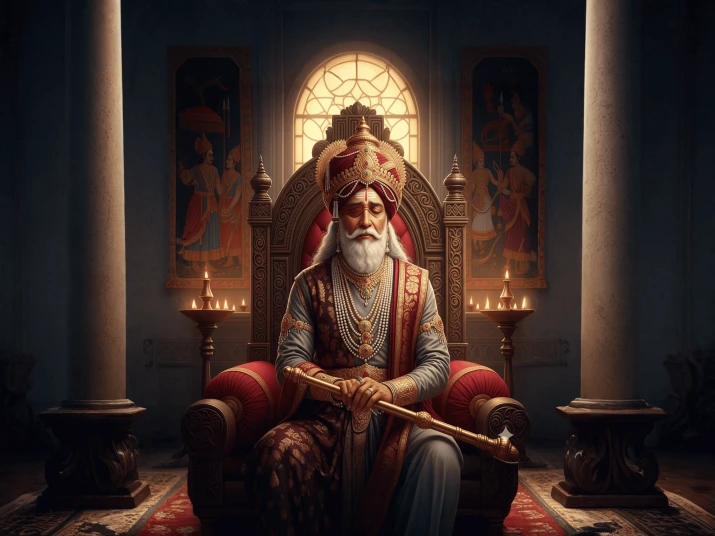
Vidura, one of the wisest characters in the Mahabharata, was born to Maharishi Vyasadeva and a maidservant. When the royal mother Satyavati of Hastinapur felt the need to ensure the succession of the dynasty after the untimely death of her two sons, Chitrangada and Vichitravirya, she requested Vyasadeva to give birth to a child through the Niyoga Pratha. First, Vyasadeva was sent to the two princesses Ambika and Ambalika. Dhritarashtra and Pandu were born from them, respectively. But the third time, when Ambika expressed her reluctance to meet Vyasadeva due to fear and shyness, he sent a trusted maidservant in her place. Vidura was born from this maidservant's womb, who later became a great model of knowledge, justice, and ethics.
In that era, the Niyoga practice was a widely accepted social practice. The purpose of this was to preserve the lineage if there were no children in the royal family. The main goal of this system was to protect the kingdom, ensure political stability, succession, and maintain social order. If the continuity of the bloodline of the king or dynasty was broken, the state could become unstable. Therefore, in such a situation, a sage or a capable man was appointed to protect the lineage.
The birth of Vidura is therefore not just a family event; it is a manifestation of the social reality, political needs, and religious rules of the time. Although he was not the heir of the dynasty by birth. However, Vidura established himself as one of the most respected characters in the Mahabharata due to the power of his wisdom, honesty, and sense of justice.
How did he become one of the ministers of the Kuru dynasty despite being born as a 'Sudra' in the social structure and caste system?
Although the caste system based on birth was strict in the then social system of the Mahabharata, the rise of Vidura proves that the power of knowledge, ethics, and wisdom sometimes surpasses even birth identity. Although he was born in the womb of a maidservant, i.e., a 'Sudra' according to the social structure, he still had the blood of sage Vyasa, which made him extraordinary in mental acuity, logic, and moral intelligence. These qualities established him as one of the greatest advisors and ministers of the Kuru dynasty.
There were several important reasons behind Vidura's rise in the Hastinapur royal court. First, Rajmata Satyavati herself accepted Vidura as a member of the royal family. As a result, he became accustomed to the education of politics, justice, and state administration from his childhood. Second, Vidura was wise, exceptionally rational, and just, qualities that the royal family gave special importance to. It is mentioned in the scriptures, "The ruler who accepts truth, only a wise man like Vidura shows the way in his kingdom."
Thirdly, Dhritarashtra, Pandu,u, and Bhishma all highly respected Vidura's wisdom. Bhishma in particular saw him as an invaluable advisor on matters of state policy. Since in that era, skill, fairness, and knowledge of scripture were very valuable qualities in conducting politics, Vidura was appointed as the chief minister of the Kuru assembly on the strength of his qualifications.
The most important thing is that Vidura never saw his birth identity as a weakness. Rather, through ethics, honesty, and honest advice, he proved that true dignity is not in birth, but in deeds. Therefore, he became an unforgettable model of policy for the Kuru kingdom.
Is Vidura's strict stance towards Duryodhana a reflection of his personal principles or political acumen?
In the Mahabharata, Vidura is portrayed as a just and far-sighted advisor. He is not only the royal family's internal political watchdog but also a symbol of moral and social ideals. If his strict stance towards Duryodhana is analyzed, it is seen that it is not only a personal principle but also a profound reflection of political acumen.
First, Vidura's personal principles are strong. Although he was born into the Kaurava clan, he never showed any bias. He took a firm stand against Duryodhana's arrogance, greed, and unfair behavior. He was cautious and strict in all cases of insulting Draupadi, gambling, and injustice towards the Pandavas. Adhering to justice and religion, protesting against injustice, and fulfilling social and moral responsibilities are all part of his personal principles.
Second, his strict stance is also a reflection of political acumen. Vidura knew that Duryodhana's unwanted ambition and stubbornness would destroy the stability of the kingdom. The neglect of the Pandavas and Duryodhana's tyranny would soon lead to the downfall of the Kuru dynasty. Therefore, he warned sternly, so that the national interests and long-term peace would be protected.
Therefore, Vidura's strictness is not only a moral duty. Rather, it is also an expression of the political foresight necessary to maintain the stability of the state. His example proves that when a leader's principles and intelligence go together, it is possible to maintain not only personal justice, but also the stability of society and the state.
Vidura's strict stance towards Duryodhana was a complex combination of personal principles and political intelligence. This makes him an important character in both the moral and political perspectives of the Mahabharata.
Why is Vidura's advice considered the highest standard of politics and ethics in the Mahabharata?
In the Mahabharata, Vidura is not only seen as an advisor to the Kauravas and Pandavas. He combined morality, foresight, and political wisdom to give advice that is considered the ideal form of politics and ethics. The main principles of Vidura's advice are justice, patience, truth, and foresight, which are equally applicable to the individual and the state.
First, Vidura's advice is moral and just. He was strict against the injustice and arrogance of Duryodhana. Yet he did not resort to violence or personal revenge. Whether it was the humiliation of Draupadi, the game of gambling, or the exile of the Pandavas, his advice was always guided by the light of justice. He showed that steadfastness in ethics and religion is essential for any leader, and this is the basis of modern politics and ethical theory.
Second, he was a symbol of foresight and political wisdom. Vidura could understand. The decision that is taken today for personal or political interests, its impact can cause a disaster in the state and society in the future. Therefore, his advice reflects not only morality but also the stability, security, and long-term peace of the state.
In addition, Vidura's advice is effective as a criterion for decision-making, where interests, morality, and strategy are integrated. He showed how coherent and permanent leadership is possible by maintaining a balance between truth, justice, and politics.
In the Mahabharata, Vidura's advice is considered the highest criterion of politics and ethics. Because it is a unique combination of moral firmness, foresight, and political intelligence. These teachings apply not only to personal life, but also to the management of the entire society and state.
Vidura's moral stance against Shakuni's diplomacy?
In the Mahabharata, the characters of Shakuni and Vidura symbolize two opposites. Shakuni conducts politics through strategy, cunning, and selfishness. His personal interests and the power of the Kaurava dynasty are the main goals. He wants to control the situation by using conspiracy, deception, and lies. Shakuni does everything to satisfy his own interests, including inciting Duryodhana, playing gambling games, and causing injustice and confusion to the Pandavas. His diplomacy is not transparent; it is beyond the bounds of morality and is a puzzle even for far-sighted politics.
In contrast, Vidura's stance is moral, just, and far-sighted. Vidura always prioritizes truth and justice, not personal interests or bias. He understood Shakuni's conspiracy and tried to warn the Kauravas. Vidura's strategy was consistent with morality, strict caution when necessary. But never participating in injustice. Whether it is the humiliation of Draupadi, the gambling game, or the exile of the Pandavas, his advice was the guide to justice and peace.
Vidura shows that working only for strategy or power in politics is destructive. Decisions that combine morality, honesty, and foresight create the foundation of lasting peace and social stability. Vidura's moral stance against the strategy of Shakuni proves that no matter how great the temptation or pressure comes, it is the highest duty to remain on the path of justice and honesty.
Shakuni's diplomacy was a symbol of self-interest and deceit, where the goal was to increase personal power. In contrast, Vidura's moral stance is reflected in giving the highest value to honesty, justice, and the permanent welfare of the state and society. This is one of the most important lessons of the moral and political teachings of the Mahabharata.
How relevant is Vidura's advice in an era of corruption, abuse of power, and moral decay?
When corruption, abuse of power, and moral decay have become common in today's society, Vidura's advice from the Mahabharata has become extremely relevant. Vidura was not only an advisor to the Kauravas and Pandavas. He displayed a rare combination of justice, honesty, foresight, and political acumen. These values are equally applicable to modern society and leadership.
First, moral stability. Vidura always gave priority to truth and justice. He knew that if deprived of power or self-interest, disaster would occur in the state and society. Even today, leaders or individuals who act outside of morality and act for their own interests cause long-term damage to society and institutions. Vidura's advice reminds us that morality is not silence, but the basis of strong leadership.
Second, foresight and awareness. Vidura showed that it is important to foresee the consequences of any decision. In the modern era, ill-considered policies, selfish decisions, or corrupt behavior destabilize the state, institutions, and society. Following Vidura's advice makes the path of leadership sound and permanent.
Third, impartiality and fairness. He never put personal relationships or interests above justice. In modern society, favoritism, greed, or abuse of power often create inequality and division. Vidura's principles are powerful guidelines to prevent this disaster.
In an era of corruption, abuse of power, and moral decay, Vidura's advice is not only relevant. It is a guide to justice, honesty, and foresight for modern society and leadership. These teachings of the Mahabharata still provide strong moral and political direction today.
Are Vidura's warnings just for politics, or do they also show the way to understanding the inner world of humans?
In the Mahabharata, Vidura was not only a political advisor to the Kauravas and Pandavas. He also showed the way to understand society and people with moral and mental foresight. His warnings are not limited to politics alone. Rather, they provide a direction to understand the inner world, psychology, and principles of behavior of people.
First, political relevance. Vidura knew that if governance, power, and political position are not properly managed, the state can be ruined. He highlights the possibility of leaders going the wrong way due to filial piety, pride, or greed. His warnings show how principles, foresight, and prudence can keep a state or institution stable and orderly.
Second, deep insight into human consciousness. Vidura is not just a politician. He saw people as people. Duryodhana's arrogance, the tolerance of the Pandavas, and Dhritarashtra's hesitation. In all this, he tried to explain the mental weaknesses, biases, fears, and temptations of people. His warnings also highlight the underlying psychological reasons behind human behavior and decisions.
Third, moral education and self-identity. Vidur repeatedly showed that justice, truth, and self-knowledge are the inner strengths of man. By following his advice, a person not only plays the right role in society but is also able to understand the depth of his own mind and character.
Vidur's warnings are not only for political decisions; they also provide guidance for understanding the inner world, morality, and self-awareness of man. Therefore, his teachings are equally relevant today for politics, morality, and personal life.
What could be the impact of the lack of a courageous and truthful advisor like Vidura in the modern state system?
Vidura was the most just and far-sighted advisor in the Mahabharata. If such a brave and truthful advisor is absent in the modern state system, it can have a very adverse effect on the state, society and leadership.
First, a lack of foresight and moral guidance. Vidura's warnings and fair advice would have helped the king to make difficult decisions. In his absence, modern leaders may take wrong decisions due to interests, pressure or popular support. This results in instability, corruption and immorality in politics and administration.
Second, abuse of power and uncontrolled selfishness. If the advisor does not have the courage to tell the truth, the advisor becomes only an admirer or a threatening companion. In this, the leader does not learn morality and restraint. Abuse of power becomes a common occurrence, and the institutions of the state are weakened.
Third, conflicts and crises are prolonged. Just as Vidura tried to prevent the destruction of the Kuru kingdom. In a modern state, too, the lack of a brave advisor can transform a small problem into a big crisis. Conflicts and wrong solutions in politics and administration harm the stability of the state and public service.
Fourth, lack of morality in leadership. Without truthful advisors, leaders work only for self-interest, greed, or power. Trust and sense of justice in society weaken, which in the long run creates dissatisfaction and division between the people and the administration.
In a modern state, the lack of courageous, moral, and far-sighted advisors like Vidura is the moral foundation of the state. This can harm political stability and the quality of public service. This proves that having truthful advisors with the leadership is essential for running the state.
How effective is Vidura's calm attitude but tough advice in today's political and family crises?
Vidura was a symbol of justice, morality, and foresight in the Mahabharata. His distinguishing feature was to give tough and realistic advice with a calm attitude. If such an approach is followed in today's politics or family, it can be very effective in resolving crises.
First, a calm attitude keeps the situation stable. In modern political or family conflicts, tension, anger, or arrogance are reduced. If a calm-minded advisor like Vidura is involved, the initial heat of the conflict decreases. Opportunities are created for discussion and resolution.
Second, tough advice shows the path of truth and justice. Many times in politics or family, leaders or members make wrong decisions due to interests, emotions, or bias. Advice like Vidura's principles is honest but tough. For example, protesting injustice or taking tough decisions gives the right results for everyone in the long run.
Third, a combination of foresight and moral education. Vidura never just showed alleged kindness; his advice always considered justice and future implications. In modern society, it is effective for leaders, family heads, or advisors. Decision-making is not just about solving problems immediately, but also about establishing long-term stability and justice.
In today's political and family crises, Vidura's calm but firm advice, applied to the situation, reduces tension, maintains fairness, and enables lasting solutions. It proves that both hard truth and patience are the keys to success in leadership and counseling.
How realistic is it in today's politics that Vidura never compromised in telling the truth?
In the Mahabharata, Vidura is seen as a courageous truth-teller. Who never compromised for justice and truth. He gave strict and clear advice in all important incidents like Draupadi's insult, gambling, or Kurukshetra. His ideal was moral and just leadership, which ensures the stability of the state and the welfare of society.
In today's politics, this ideal is often not consistent with the harsh reality. The modern political system is complex. Political parties, media, public attitudes, and political pressure. These prevent leaders from telling the simple truth. Although it is fair for everyone, sometimes revealing the truth can be politically dangerous or detrimental to their interests.
However, that does not mean that Vidura's ideal is irrelevant. Courage to tell the truth, morality, and just advice. These are essential for political leadership. It just requires some strategy and adaptation to reality. That is, in today's politics, leaders need to try to tell the hard truth like Vidura. However, if necessary, steps have to be taken in line with political reality.
Bidur never compromised for truth, which is the pinnacle of ideals and morality. Although this is not entirely realistic in current politics. Trying to maintain truthfulness and morality is very important for any state and society. When combined with political reality, Bidur's teachings are still relevant and applicable today.
Does Vidura's position in the Kuru assembly symbolize the voice of conscience?
In the Kuru assembly of the Mahabharata, Vidura was a very fair and far-sighted advisor. Amidst the immense temptations and conspiracies by Shakuni, Duryodhana, and other leaders, he was the only person who clearly spoke about justice, truth, and morality. For this reason, his position in the Kuru assembly can be called the symbol of the voice of conscience.
First, cautious and fair advice. During injustices like the insult of Draupadi, the gambling game, or the exile of the Pandavas, Vidura was not only cautious. Rather, he gave appropriate advice. He knew that allowing injustice would endanger the future of the Kuru dynasty. In the assembly, he showed the courage to speak the truth, while others remained silent or were biased due to their interests and temptations.
Second, a symbol of moral firmness. In the Kuru assembly, Vidura knew that even though Duryodhana was the favorite son in the eyes of the ruler and the royal family, he was on the path of justice. He could not compromise. He established honesty, justice, and religion at the highest standards. For this reason, his presence also provided a stability in mental and moral terms among the other members of the assembly.
Thirdly, a symbol of foresight and restraint. Vidura did not only speak morally. He also saw the future implications. He warned that explain the long-term consequences of every decision of the assembly.
Vidura was a very moral and far-sighted voice in the Kuru assembly. His presence and warnings clearly prove that the voice of conscience is to take a courageous and firm stand for truth, justice, and morality an eternal teaching message to save society and the state from destruction.
Is Vidura's wisdom just political advice or also a message of spiritual self-purification?
In the Mahabharata, Vidura is not seen only as an advisor to politics. His wisdom is equally relevant in all three fields: political, moral, and spiritual. He not only gives strategic advice to the king and his subjects. He also showed the path of the inner world and the self-purification of people.
First, political advice. Vidura, with ethical and far-sighted advice, instructed the ruler to adhere to justice, honesty, and foresight. He knew that if decisions were made only for the greed of power or self-interest, the state would become unstable. This aspect is also very relevant for modern political leadership.
Second, moral education. Vidura repeatedly emphasized honesty, justice, and truth. He showed the king and the subjects how selfishness, arrogance, or bias can lead to moral and social disaster. Morality affects not only political decisions, but also the character of the individual and the welfare of society.
Third, the message of spiritual and self-purification. Vidura's wisdom points to the purification of the human heart and soul. He shows how self-control, patience, restraint, and walking with conscience bring mental and spiritual prosperity. Standing firm on the path of truth and justice strengthens not only the state but also the mind and soul of the individual.
Vidura's wisdom is not just political advice. It is a blend of spiritual and moral teachings. His teachings show that truthfulness, righteousness, and self-purification are. The combination of these three is the key to personal, social, and political stability.
Tags
For Add Review. You Need To Login First Login Page
-
LATEST
-
POPULAR

What is marriage according to Sanatan Dharma and why is marriage called a bond of birth and rebirth?

The Sydney attack is also the result of the same petro-dollar, Pakistan and Deep State radical narratives.

Comments
No comments yet